Contents: Section One: The Researcher (15 min read)
Voice, positionality, and the question that started everything
Positionality Statement
Who I Am, Where I Stand, and Why It Matters
Heritage and Identity
I am a white settler woman with a layered and complicated heritage. My family carries French roots reaching back to the 1500s, when ancestors settled in what would become Acadian territory along the Atlantic coast. In the 1700s, those lines were disrupted during the Great Expulsion, when English and French colonial powers displaced Acadian communities, separated families, and removed people from lands they had cultivated for generations. This history of expulsion, dispersal, and rebuilding lives in my family stories and in my body as inherited memory.
My lineage also includes Mi’kmaq ancestry that emerged through Acadian–Mi’kmaq interrelations. I hold this connection with curiosity, respect, and a clear awareness that this distant relationship fails to position me to claim Indigenous identity. I am clear about this boundary. Yet I approach questions of territory, belonging, and the ethics of conducting research on Indigenous lands with an attentiveness shaped by knowing that my own family history includes both settler arrival and Indigenous connection, even when that connection remains too distant to claim.
My grandfather immigrated to Canada from Austria in the 1800s, crossing an ocean in search of possibility and carrying with him an understanding that belonging must be created through relationship, place, and practice rather than assumed through entitlement.
These threads weave through me: French, Mi’kmaq, Austrian. Each carries its own relationship to land, displacement, and the ongoing project of finding home. When I acknowledge that Thompson Rivers University sits on unceded Tk’emlúps te Secwépemc territory, I do so as someone whose own family history includes both settler arrival and Indigenous connection, while recognizing that this connection remains distant and carries responsibilities rather than claims.
This positioning invites humility. I understand that belonging is complex, that identity carries obligations, and that the stories we tell about who we are shape what we notice, what we overlook, and how we act as researchers, educators, and community members.
A History Written in Precarity
I was the first person in my family to attend university. This fact shapes everything I understand about higher education: as simultaneously a site of possibility and a space where people like me were never quite expected to arrive.
I grew up in poverty, in households where money was always uncertain and the future was something you survived rather than planned. By the time I was twenty-five, I was a single mother of three children, working at a donut shop, taking university courses part-time when I could afford them, trying to imagine a life beyond the one that circumstance had handed me.
Those years taught me about precarity in ways that elude textbooks. I learned what it means to calculate whether you can afford both groceries and textbooks, to choose between attending class and working the shift that will pay your rent. I learned the exhaustion of performing competence in spaces where people assume you are out of place, of translating yourself into institutional languages that were never designed for people with your background, your story, your accent. I learned that resilience is labour. And I learned that institutions often depend on the unpaid work of those they position at their margins.
When I listen to international students describe their experiences of economic precarity, of feeling simultaneously essential and peripheral to the institution, I recognize something. Their circumstances differ enormously from mine. They face visa restrictions I never navigated, cultural translations I never had to perform, and distances from family I can only imagine. Yet there is a resonance, a shared knowledge of what it means to exist in an institution that needs you while refusing to secure your place within it.
I call this relationship asymmetrical precarity: a recognition of connection that refuses to collapse into false equivalence. The concept names patterns of institutional treatment that rhyme without being identical, vulnerabilities that overlap without being interchangeable.
Twenty-Five Years at the Margins
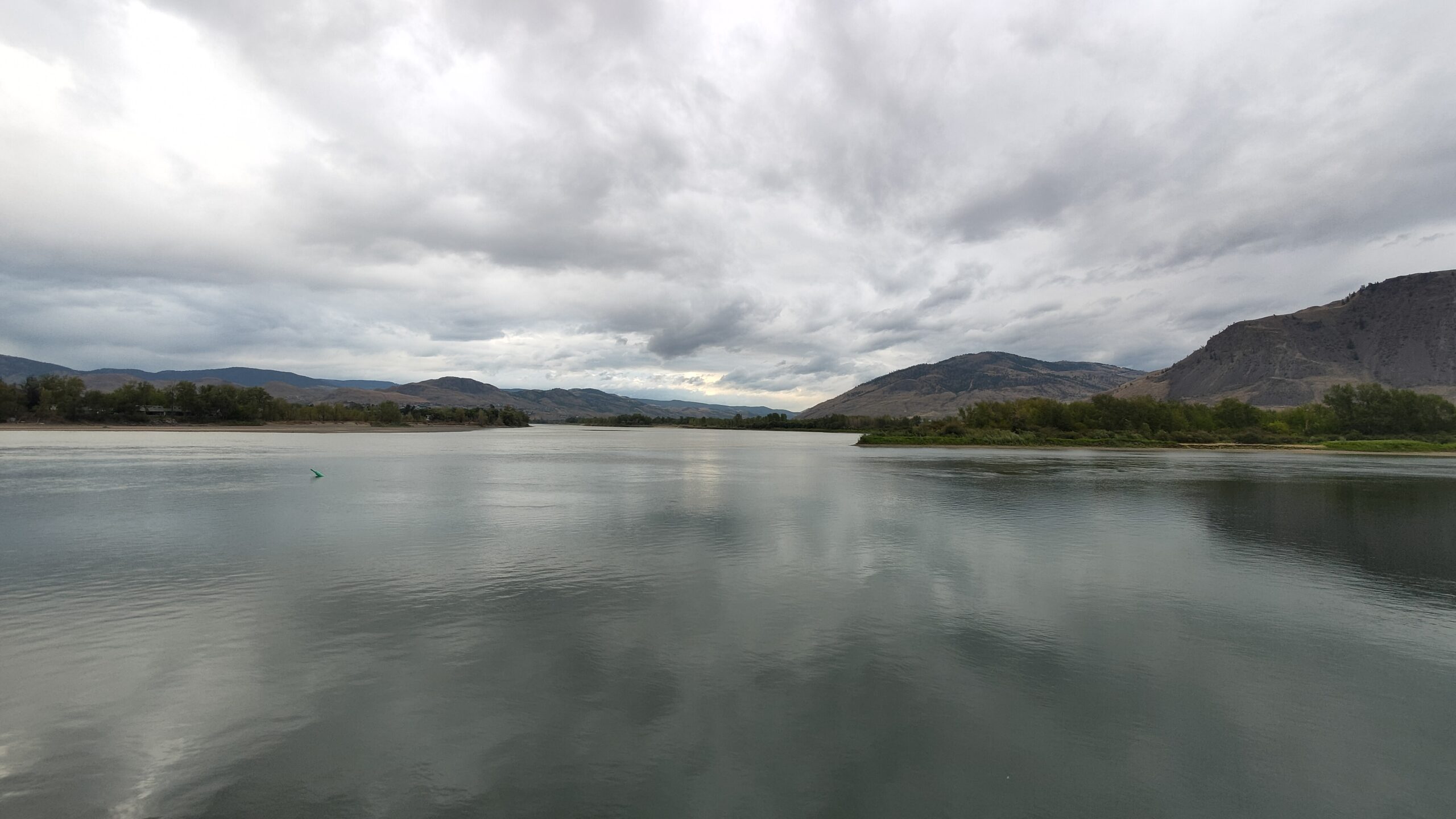
I spent twenty-five years at Thompson Rivers University in Kamloops, British Columbia, on unceded Tk’emlúps te Secwépemc territory. Nineteen of those years I taught business students about ethics, leadership, organizational behaviour, and diversity, always on semester-by-semester contracts, always wondering whether I would be invited back. Each contract was temporary and renewable only at the institution’s discretion.

This positioning is directly relevant to my research. I studied institutional inclusion from a location of institutional exclusion. I taught international students about organizational justice while experiencing my own form of organizational injustice. I asked students to trust me with their stories, even though I lacked the institutional security that might make me a “safe” person to confide in. These tensions informed rather than invalidated my research. I bring to this study a particular kind of knowledge: the knowledge of someone who has spent decades learning how institutions work from the position of someone they have never fully embraced.
I also serve as Chair of the Non-Regular Faculty Committee for the Federation of Post-Secondary Educators of British Columbia (FPSE), advocating for contract faculty across the province. This advocacy work taught me how budget decisions made in closed meetings cascade into precarious lives, how institutions use “flexibility” to mean disposability, and how the international students I taught navigated the same extractive system with far fewer protections for resistance.
Becoming the Data
In May 2025, after a quarter century of service, I was laid off. In the same month, I received the Faculty Council Teaching Award. The institution that deemed me expendable simultaneously declared me exemplary. Two documents, two logics, two entirely separate bureaucratic pathways that never spoke to each other. One hand failed to know what the other was doing, because the institution lacks hands. It has spreadsheets.
I had become the very phenomenon I was studying. I call it ghost data: the way institutions erase contributions from their records while the work those contributions produced continues to circulate. I had theorized this concept through the withdrawal of a research participant whose precarity consumed her capacity to participate. Then the institution enacted it on me. The researcher and the researched had converged in the same structural outcome.
Table 1
Institutional Recognition Timeline
| Year | Award |
|---|---|
| 2021 | TRU Student Empowerment Award |
| 2023 | TRU Interculturalization Award |
| 2024 | Faculty Council Service Award |
| 2025 | Faculty Council Teaching Award |
| 2025 | Position terminated |
Asymmetrical Precarity: Connection Without Equivalence
I can stand with international students without standing in for them. I can use my relative privilege to amplify their concerns without appropriating their experiences as my own. The following table maps the dimensions of this relationship:
Table 2
Dimensions of Asymmetrical Precarity: Researcher and Participant Positioning
| Dimension | Researcher (Contract Faculty) | Participants (International Students) |
|---|---|---|
| Legal Status | Canadian citizen; permanent right to remain | Visa-dependent; right to remain conditional on enrolment and compliance |
| Employment | Semester-by-semester contracts; uncertain yet without legal jeopardy | 20-hour weekly work limit; precarious student employment; work permit tied to study permit |
| Voice | Union protection; can organize, grieve, and speak publicly without deportation risk | Complaint risks visa status; silence purchased by vulnerability; advocacy jeopardizes presence |
| Racial Position | White; shielded from racialized scrutiny; read as belonging in academic spaces | Racialized; subject to additional surveillance, assumptions about competence, accent-based bias |
| Stakes of Failure | Job loss; financial strain; remains in country with support networks | Deportation; loss of entire investment; family shame; foreclosed futures; separation from life built here |
Why I Share All of This
Qualitative research requires transparency about where the researcher stands. My heritage, my class background, my contract status, my layoff, my whiteness, my citizenship: these are the lenses through which I interpreted what my participants showed me. They are strengths, and they are limitations. Making them visible is an act of scholarly integrity rather than confession. It allows you, as a reader, to assess my interpretations with full knowledge of the ground I stand on.
The ground is complicated. It always has been. I have learned that belonging is complex, that identity carries obligations, and that the stories we tell about who we are shape what we notice, what we overlook, and how we act as researchers, educators, and community members.
I live and work on Syilx (Okanagan) territory. This research was conducted on unceded Tk’emlúps te Secwépemc territory within Secwépemcúl’ecw. I hold these acknowledgements as ongoing questions rather than settled statements, informed by a dissertation that critiques the very performativity of institutional land acknowledgements while insisting that the obligations they name are real.
About the Researcher
Amy Tucker, DSocSci (Candidate)
Royal Roads University
ORCID: 0009-0006-9872-2248
I am a doctoral candidate in the Doctor of Social Sciences programme at Royal Roads University, completing my dissertation, Through Our Eyes: A Photovoice Study of Belonging, Precarity, and Possibility with International Students in Higher Education. My research examines how international students experience the gap between institutional inclusion rhetoric and lived belonging, using a methodology I developed called blended witnessing: an integration of Photovoice (Wang & Burris, 1997), Scholarly Personal Narrative (Nash, 2004), and Interpretative Phenomenological Analysis (Smith et al., 2009) within a critical-transformative paradigm (Mertens, 2009).
I spent twenty-five years at Thompson Rivers University in Kamloops, British Columbia, including nineteen years teaching organizational behaviour, business ethics, leadership, and diversity, primarily to international student populations. I chair the Non-Regular Faculty Committee of the Federation of Post-Secondary Educators of British Columbia (FPSE), advocating for contract faculty across the province.
Supervisory Committee
Dr. Brian White (Supervisor), Dr. Eugene Thomlinson, Dr. Kyla McLeod
Mentor: Dr. Mary Bernard
Research Assistant: Jesal Thakkar
Scholarly Contributions
My dissertation advances four original contributions to the social sciences:
Table 3
Four Scholarly Contributions
| Contribution | Type | Description |
|---|---|---|
| Time tax | Empirical | Documents compounded temporal extraction from international students through immigration, economic, linguistic, and affective labour |
| Malperformative aesthetics | Theoretical | Extends Ahmed’s (2012) non-performativity into spatial and visual registers, demonstrating how architecture performs inclusion while withholding it materially |
| Blended witnessing and ghost data | Methodological | Integrates Photovoice with Scholarly Personal Narrative; treats participant withdrawal as structural evidence rather than methodological failure |
| Mindset of enough | Conceptual | Counter-logic reframing student survival strategies as sophisticated refusal of institutional artificial scarcity |
Research Interests
International student belonging and precarity in Canadian higher education; participatory visual methodologies (Photovoice, arts-based inquiry); Scholarly Personal Narrative as qualitative methodology; critical university studies and academic capitalism; care ethics, epistemic justice, and trauma-informed pedagogy; contract faculty labour and the “gig academy”; decolonizing approaches to business education.
Teaching Recognition
TRU Student Empowerment Award (2021); TRU Interculturalization Award (2023); Faculty Council Service Award (2024); Faculty Council Teaching Award (2025).
Contact
ORCID: 0009-0006-9872-2248
Blog: throughoureyes.ca
The Catalyzing Question
Where Do I Put Grandmother’s Wisdom?
September 14, 2022. The Thompson Rivers University parking lot.
My coffee had gone cold. I had been sitting in my car for forty-five minutes, unable to move, replaying a conversation that had happened in my classroom the day before.
A student from India, one of forty international students in my Business Ethics class, had raised her hand during our discussion of organizational justice. She wanted to know how her grandmother’s business wisdom, passed down through generations of women who had run successful textile operations in her home village, could fit into our case study analysis.
The question was earnest and careful. It exposed something I had sensed throughout my years of teaching yet had never fully confronted. The Western business curriculum I delivered held zero room for her grandmother. The frameworks we used, drawn from Harvard Business School case studies and Anglo-American management theory, assumed a particular kind of knowledge, a particular kind of knower, and a particular relationship between learning and power that rendered the very expertise this student embodied invisible.
Her grandmother had managed debt through community witnessing rather than contracts. She had managed supply chains through relational redundancy rather than just-in-time efficiency, ensuring survival during lean years through relationships that Western models would dismiss as “inefficient.” Her grandmother’s wisdom was denominated in a currency the institution refused to recognize.
“Where do I put grandmother’s wisdom?”
I had no good answer.
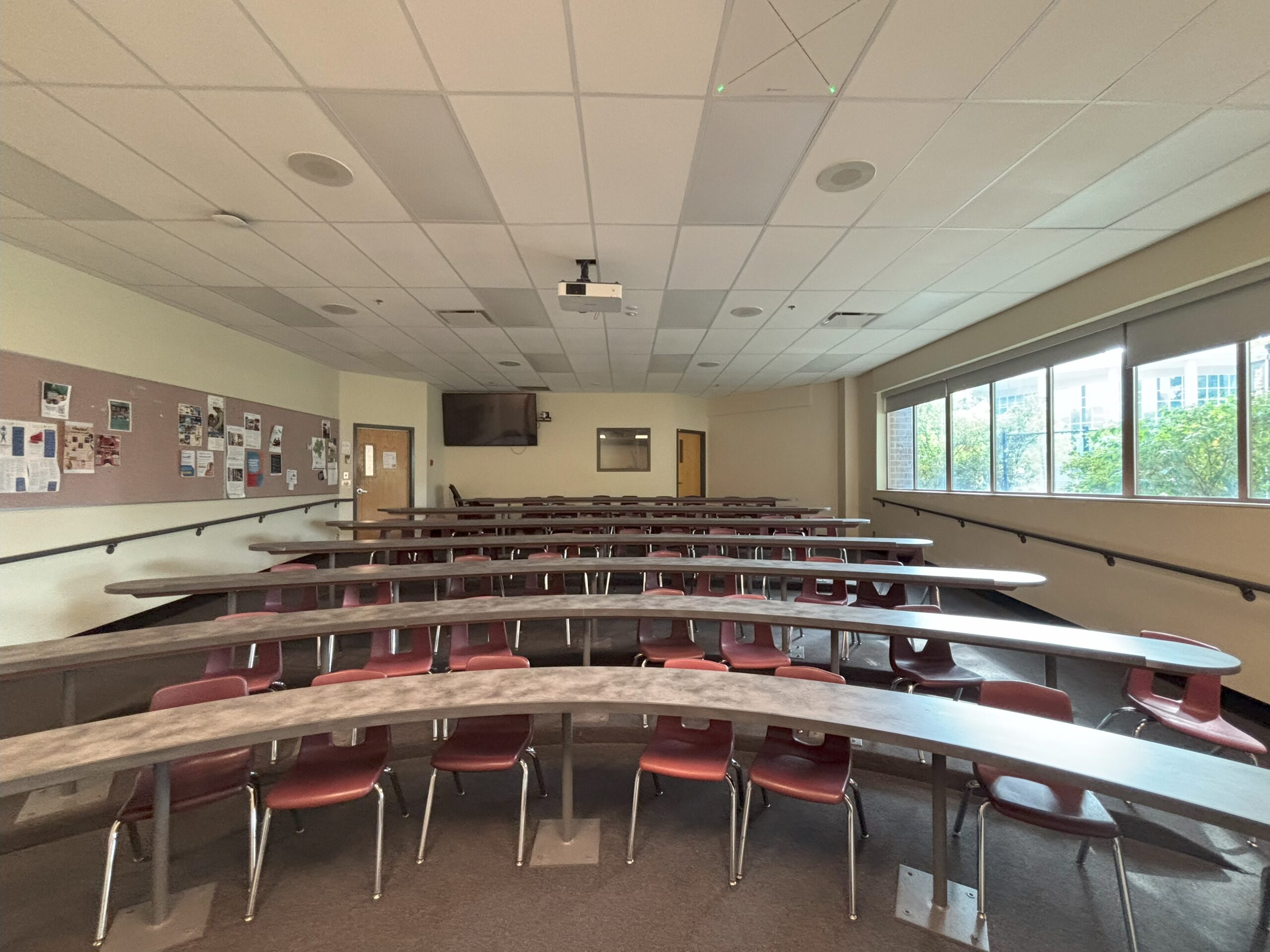
Paulo Freire (1970/2018), whose work on critical pedagogy I had studied yet perhaps not lived sufficiently, would have recognized what was happening in that moment. The banking model of education he critiqued, in which teachers deposit predetermined knowledge into passive student receptacles, had structured my curriculum in ways I had not seen. The grandmother’s wisdom had no account in this bank.
That morning in the parking lot, with the September sun warming the windshield and students hurrying to classes I might never teach again, something shifted.
I realized that for nineteen years I had been teaching a subject called “ethics” without ever questioning whose ethics. I had spent nearly two decades assigning case studies and drawing Porter’s Five Forces on whiteboards, distributing frameworks that positioned themselves as universal while serving particular interests. I had been, as the postcolonial scholar Boaventura de Sousa Santos (2014) would say, a conduit for epistemicide: the killing of knowledge systems. And I had done it without knowing.
I thought about the students I had failed before I learned to see. The ones who sat quietly while I explained organizational justice using theories developed in contexts that bore zero resemblance to their lives. The ones who learned, through my teaching, that their knowledge was lacking in value. That their grandmothers’ wisdom was folklore rather than theory. To succeed in business, they would need to become fluent in a language that had no words for what they already knew.
Those years are behind me. Yet I could refuse to continue.
This dissertation began to take shape in that parking lot. I would ask international business students to show me their university through their own eyes. I would hand them cameras and ask them to photograph what the institution refused to see. I would develop a methodology capable of holding their testimony alongside my own complicity. I would learn to see what I had been trained to overlook.
I developed what I call blended witnessing: a methodology that braids Photovoice (Wang & Burris, 1997), in which participants take photographs of their own experience, with Scholarly Personal Narrative (Nash, 2004), in which I, as the researcher, weave my own story alongside theirs. The term “blended” signals deliberate interweaving rather than mere combination. The term “witnessing” captures the ethical stance: to be present to another’s experience, to receive testimony with the seriousness it deserves, and to carry that testimony forward in ways that honour its weight.
Four students picked up cameras and showed me what it looks like to carry knowledge the institution refuses to recognize. They photographed empty lounges that gleamed under institutional lighting while students worked graveyard shifts elsewhere. They photographed locked doors on “bridge programs” that connected nothing to nowhere. They photographed hidden stones and overgrown gazebos where they found refuge from the loudness of institutional expectations. They generated concepts that exceed the frameworks available in the scholarly literature: checkbox inclusion, the loneliness of diversity, fluent in appearances, and the mindset of enough.
A fifth student tried to participate, yet was consumed by the very precarity the study sought to document before she could take a single photograph. I came to understand her absence as ghost data: structural evidence of how the system silences participation before it can occur. Her empty folder became the most eloquent testimony in the study.
And then the institution enacted its logic on me. Twenty-five years of service. Nineteen years of teaching. Laid off in May 2025. Teaching Award in June. I became the ghost data I had theorized, disappeared from the institutional record, while the work I produced continues to circulate.
The Answer Is a Practice
Three years later, that question has become a dissertation, a methodology, a set of concepts that give language to experiences the institution prefers to leave unnamed, and this blog.
The grandmother’s wisdom still has no proper place in the business curriculum. The question remains unanswered in the way institutions measure answers: there is no box on the rubric, no learning outcome, no module in the syllabus.
Yet the question has been heard.
The answer to “Where do I put grandmother’s wisdom?” turns out to be something other than a location. It is a practice. It is about transforming the curriculum itself, about questioning the very categories that made the grandmother’s wisdom seem out of place. It is about building classrooms, institutions, and research practices where the question itself would never need to be asked, because the wisdom would already be welcome.
That is the work this research undertakes. It may be insufficient on its own. Yet it is a beginning.
This blog is where the answer is still being built.