⚠️ Research in Progress: Doctoral Defence Forthcoming
This site is a living academic document. Content is being updated as the dissertation moves toward its final defence. Some sections remain in draft form. New to this site? Visit the Start Here page.
How Five Disciplines Reveal the Architecture of Exclusion as a System
“If colonialism is the practice of domination, which involves the subjugation of one people to another, then the study of how colonialism works and what it produces is a study of how the practice of domination shapes the knowledge that gets produced.”
Linda Tuhiwai Smith, Decolonizing Methodologies, 1999/2021
To fully grasp what I call the architecture of exclusion within the neoliberal university, I cannot rely on a single disciplinary lens. A sociological analysis might explain the economic drivers, yet it misses the emotional toll. An ethical analysis might illuminate the moral failure, yet it misses the bureaucratic mechanisms that sustain it. This dissertation therefore weaves together five distinct yet interconnected domains of scholarship. Each strand contributes essential analytical capacity while remaining insufficient on its own. Together, they reveal the architecture of exclusion as a system rather than a collection of isolated problems.
Table 6
Five-Domain Theoretical Framework
| Domain | Key Theorists | What It Reveals | Core Concept |
|---|---|---|---|
| Sociology | Slaughter & Rhoades (2004); C. Robinson (1983); Bourdieu (1984); Standing (2011) | The university as extractive engine: converting student presence into capital while maintaining precarity | Academic capitalism; racial capitalism; asymmetrical precarity |
| Communications | Bourdieu (1991); Rose (2016); Wang & Burris (1997) | How linguistic hierarchies and the colonial gaze silence knowledge systems the institution refuses to recognize | Symbolic violence; Photovoice as epistemic intervention |
| Ethics | Noddings (2013); Fricker (2007); Freire (1998); Ginwright (2018) | The gap between institutional duty of care and lived harm; the wrong done when student knowledge is dismissed | Epistemic injustice; healing-centred engagement |
| Leadership | Ahmed (2012) | How diversity rhetoric absorbs critique and contains institutional risk rather than effecting change | Non-performativity; malperformative inclusion |
| Education | Kimmerer (2013); Wilson (2008); de Sousa Santos (2014); Yosso (2005) | The curriculum as site of knowledge system destruction; counter-narratives of community cultural wealth | Epistemicide; Community Cultural Wealth |
Note. Each domain contributes distinct analytical capacity. Together, they converge on a single claim: that international student precarity is a designed outcome stabilized through institutional practices that obscure extraction beneath the language of inclusion.
Sociology: The University as Extractive Engine
Slaughter and Rhoades (2004) developed the concept of academic capitalism to describe the integration of colleges and universities into market logics. Under academic capitalism, the university ceases to function primarily as a public good and becomes a market actor. Knowledge shifts from public resource to private commodity, and students shift from learners to consumers. This “consumer” model is, however, applied unevenly. While domestic students are subsidised by the state, international students are exposed to full market volatility, paying roughly four times the tuition of their domestic peers, with no corresponding increase in institutional support.
I extend this framework through Cedric Robinson’s (1983) concept of racial capitalism, arguing that the international student dynamic is racialised as well as economic. Racial capitalism names the process through which capitalism extracts value from the racial identity of others, treating racialised difference as a resource to be monetised. The “international student” is overwhelmingly a racialised subject from the Global South. The institution extracts value from their “diversity” (for brochures) and their finances (for budgets) while rendering their actual lives precarious. I develop the concept of the time tax to name the compounded temporal extraction experienced through immigration labour, economic labour, linguistic labour, and affective labour. Time itself becomes an enclosed resource extracted from those the institution claims to serve.

Guy Standing’s (2011) concept of the precariat (a class defined by permanent temporariness) frames the structural position of both international students and the contract faculty who teach them. I develop asymmetrical precarity to name this connection: shared patterns of institutional treatment that rhyme without being identical, vulnerabilities that overlap without being interchangeable. I can lose my job. My students can lose their country.

Communications: The Politics of Voice
Bourdieu’s (1991) analysis of linguistic capital explains why “Standard English” functions as a mechanism of power within the Canadian university. Proficiency in the prestige dialect is conflated with intelligence, academic capability, and moral worth. International students often face symbolic violence (Bourdieu’s term for the imposition of meaning systems that make social hierarchies appear natural and inevitable) when their multilingual repertoires are framed as deficits rather than assets. The student who speaks four languages yet apologises for “broken English” has internalised the institution’s hierarchy. This internalisation silences the very knowledge systems that could enrich the classroom.
Visual methodologies offer a counter-narrative to this textual hegemony. Rose’s (2016) critical visual methodology treats photographs as constructed arguments requiring interpretation rather than transparent windows onto reality. Photovoice (Wang & Burris, 1997) transforms the international student from the object of the institutional gaze (viewed in marketing brochures, counted in spreadsheets) into the subject who looks. This epistemic shift is central to the study’s design.
Ethics: The Wrong Done to the Knower
Miranda Fricker’s (2007) concept of epistemic injustice identifies two forms of harm that are directly relevant to this study. Testimonial injustice occurs when a speaker’s credibility is deflated due to identity prejudice, as when an accent leads a faculty member to underestimate a student’s intellectual capacity. Hermeneutical injustice is more structurally insidious: it occurs when someone lacks the conceptual resources to make sense of their own experience because those resources have been systematically denied by dominant frameworks. When a student’s grandmother’s business wisdom is rendered inadmissible by the case study method, the curriculum commits a hermeneutical wrong against her capacity as a knower.
Nel Noddings’ (2013) ethics of care insists that ethical action arises from the relational “space between” individuals rather than from abstract rules. In the context of international education, care ethics demands attention to specific, embodied student needs rather than mere policy compliance. Shawn Ginwright (2018) pushes further, distinguishing between trauma-informed care (“What is wrong with you?”) and healing-centred engagement (“What is right with you?”). The Photovoice design in this study is shaped by healing-centred principles: a space where students can reclaim agency over their narratives rather than performing their difficulties for institutional consumption.
Leadership: The Performance of Inclusion
Sara Ahmed’s (2012) concept of non-performativity explains how institutional diversity statements often fail to bring about what they name: the statement itself becomes a substitute for the action it describes. Ahmed demonstrates through institutional ethnography how diversity policies and committees operate within universities: the diversity statement becomes the achievement, and the environment remains unchanged. I extend Ahmed’s work into what I term malperformative inclusion: institutional actions that succeed in absorbing critique, demonstrating “awareness” of equity issues, and thereby stabilizing the very extractive systems they claim to address. The prefix mal- signals active harm rather than mere failure.
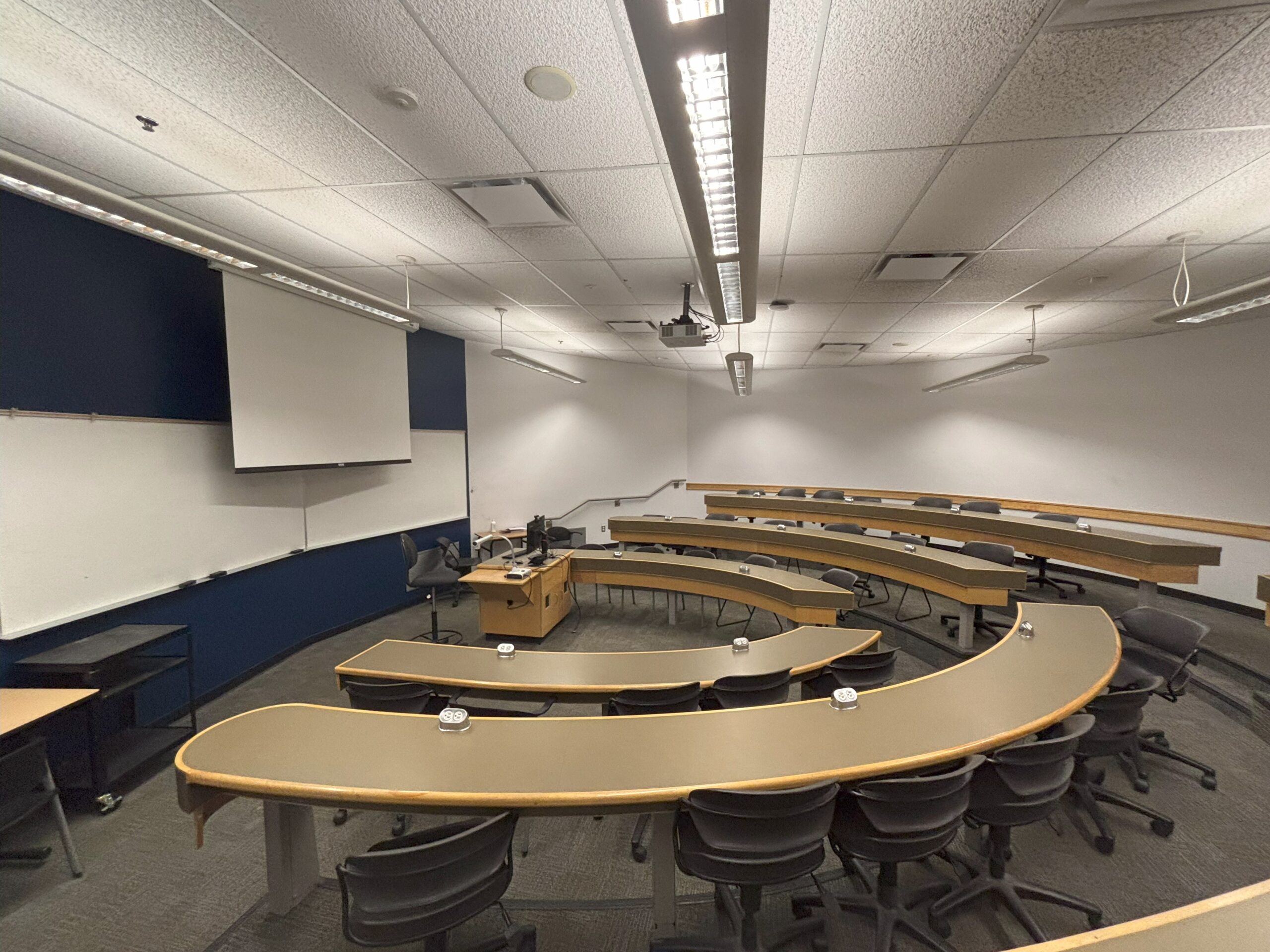
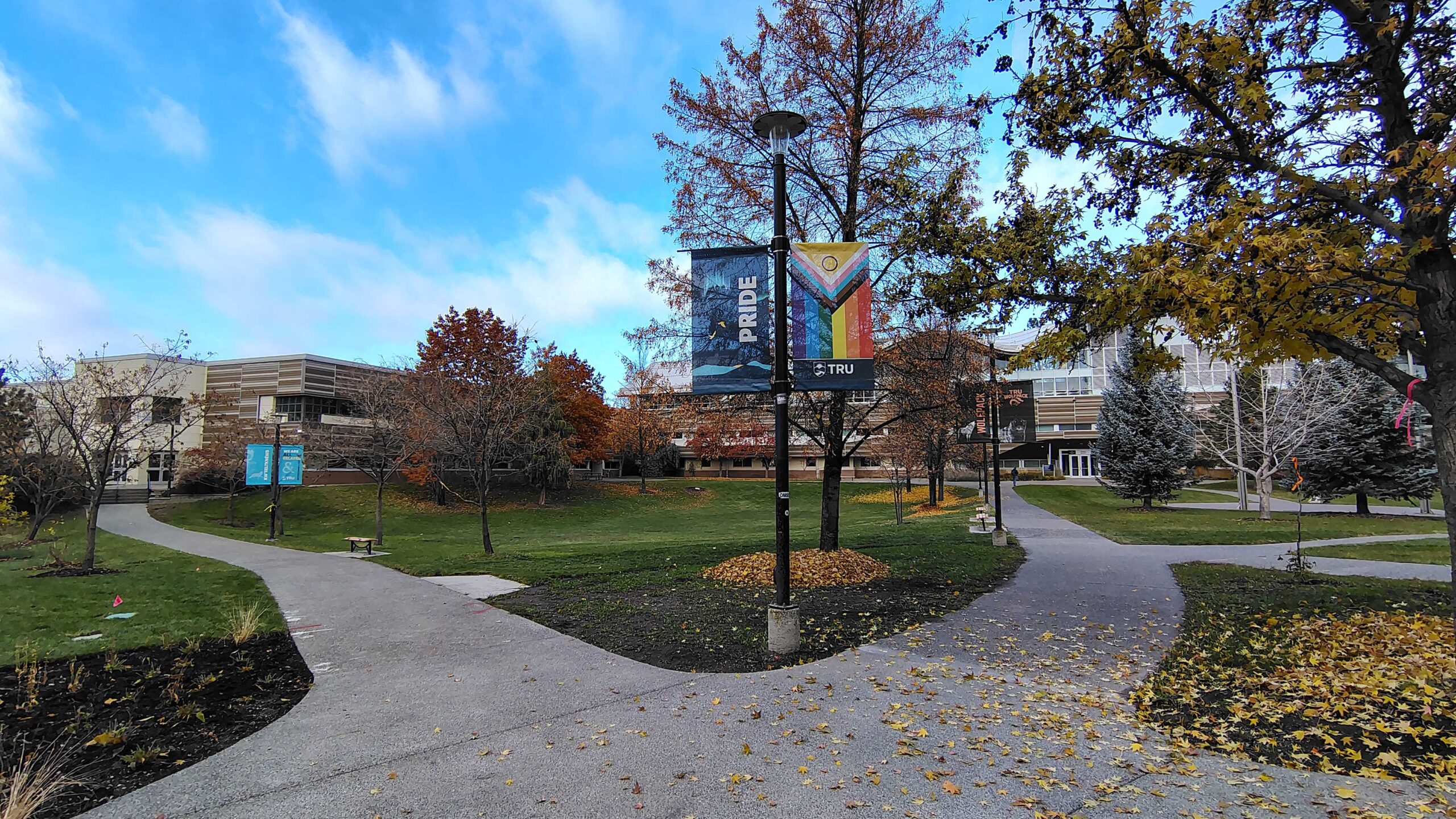
I further extend this into the concept of malperformative aesthetics: the spatial and visual register through which institutions perform inclusion while withholding its material conditions. A university that builds a lounge for international students yet locks it during hours when those students are available to use it has produced a malperformative aesthetic: the space performs inclusion for recruitment purposes while serving as evidence of exclusion for anyone who attempts to inhabit it.
Education: What the Curriculum Kills
Robin Wall Kimmerer’s (2013) Braiding Sweetgrass offers a generative metaphor for the modern university. Industrial agriculture operates as a monoculture: a single crop grown to the exclusion of all else, requiring immense inputs to survive. The business school functions similarly as an intellectual monoculture, prioritizing Western capitalism to the exclusion of all other economic epistemologies. The grandmother’s wisdom represents a polyculture: a diverse, relational ecosystem of knowledge that is resilient and regenerative, and that has sustained communities through upheavals that Harvard case studies never anticipated.
Boaventura de Sousa Santos (2014) names the systematic destruction of knowledge systems epistemicide. The case study method, drawn from Anglo-American management theory, strips business decisions of their colonial contexts and positions Western managerialism as the only valid way to organize human activity. decolonizing the curriculum requires more than adding “diverse” case studies. It requires dismantling the assumption that grandmother’s wisdom is folk knowledge rather than legitimate economic theory.
Tara Yosso’s (2005) concept of Community Cultural Wealth provides the counter-narrative. Where deficit models frame marginalized students as lacking capital, Yosso identifies six forms of wealth that communities of colour cultivate and carry: aspirational, linguistic, familial, social, navigational, and resistant capital. A grandmother’s textile business represents an abundance of familial capital. The failure lies entirely in the institution’s inability to recognize these forms of wealth as legitimate contributions to the academic field.
Shawn Wilson’s (2008) concept of relational accountability insists that research creates relationships carrying obligations beyond publication. While I am a settler researcher using a settler methodology, I draw on relational accountability as an ethical compass: findings must be returned to the communities that generated them, and the institutional capital generated by this research must be leveraged toward the structural changes the methodology is designed to surface.
The Scholarly Conversations This Dissertation Enters
A literature review does two things: it maps a terrain and it marks a position. The five domains above describe the lenses this study uses. This section does something different. It names the broader scholarly conversations this dissertation is designed to enter. These are the fields that will receive the findings when the dissertation is complete, and the communities of scholars whose prior work made this study possible.
1. Academic Capitalism and Labour Precarity in Higher Education
The first conversation is the literature on academic capitalism. Slaughter and Leslie (1997) gave the concept its name. Slaughter and Rhoades (2004) sharpened it into a full analytical framework for understanding how universities restructure toward market behaviours as public funding contracts. Kezar et al. (2019) brought it to labour, coining the phrase the gig academy to describe what the university has become: an institution that has systematically dismantled stable employment in favour of contingent, flexible, expendable arrangements.
Most academic capitalism scholarship studies faculty labour or student experience separately. This dissertation studies them together, as populations whose precarity shares structural roots even though it operates through different mechanisms and carries entirely different stakes. That pairing is the contribution. Holding both in the same analytical frame reveals something neither lens sees alone: the institution’s management of expendable populations as a coherent, if unacknowledged, system.
2. International Student Experience in Canadian Higher Education
The second conversation concerns the structural position of international students in Canadian postsecondary institutions. Sidhu (2006), Stein and Andreotti (2016), and Bhambra et al. (2018) have mapped this territory carefully. Their findings describe a central contradiction: students are recruited as revenue sources and celebrated as diversity assets while navigating institutions built around domestic student norms, Western epistemologies, and English-language cultural assumptions. They pay more. They receive less. And when political priorities shift, they absorb the cost.
The 2024 federal study permit cap made this contradiction impossible to ignore. Students who had arrived under one set of institutional promises became subjects of a different political calculus without their circumstances changing. This dissertation contributes to this conversation by centering international student voice through Photovoice methodology, and by developing the concept of ghost data: the structural significance of participant withdrawal under conditions of precarity, as evidence about the system rather than noise in the data.
3. Critical University Studies
The third conversation is critical university studies: the scholarly tradition that examines the neoliberal university as an economic institution that deploys the language of inclusion to serve the logic of extraction. Newfield (2016), Slaughter and Rhoades (2004), and Ahmed (2012) are all working in this space, each from a different angle. Ahmed names it most precisely. Non-performativity is what happens when the diversity statement substitutes for the diversity action: the statement becomes the achievement, and the conditions remain unchanged.
This dissertation contributes the concept of malperformative inclusion to this conversation. It extends Ahmed’s analysis to name institutional actions that do more than fail to perform: they succeed in absorbing critique and signalling awareness while stabilizing the very conditions they claim to address. The prefix mal- matters. The institution is doing something. What it is doing is actively harmful.
4. Participatory Visual Methodologies and Epistemic Justice
The fourth conversation concerns methodology. Wang and Burris (1997) developed Photovoice as a participatory action research method that places cameras in community members’ hands and uses structured group analysis to develop recommendations for change. Fricker (2007) provided the ethical foundation: epistemic injustice is the wrong done to someone specifically in their capacity as a knower. A methodological response to epistemic injustice is an ethical response before it is a methodological one.
This dissertation contributes a new methodology to this conversation: blended witnessing. It braids Photovoice with Scholarly Personal Narrative (Nash, 2004) through protective divergence, maintaining deliberate separation between researcher experience and participant testimony to prevent appropriation while enabling solidarity. The researcher’s story and the participants’ stories run parallel. They resonate. They remain distinct.
5. Care Ethics and Trauma-Informed Research Practice
The fifth conversation is about what research owes the people it studies. Noddings (1984, 2013), Gilligan (1982), and Ginwright (2018) provide the ethical vocabulary. Wilson (2008) provides the methodological frame through relational accountability: the recognition that research creates relationships carrying obligations beyond publication. Findings must be returned to the communities that generated them. The institutional capital of the research must be leveraged toward the structural changes the methodology is designed to surface.
This dissertation builds relational accountability into the research design rather than treating it as a post-hoc commitment. The website you are reading is part of that design. Knowledge is returned before it is presented at academic venues. The site is the return.
6. The Canadian Postsecondary Policy Context
The sixth conversation is the specific policy landscape of Canadian higher education: a federally influenced but provincially governed sector with high rates of contract faculty employment, aggressive international student recruitment, and a growing gap between institutional equity rhetoric and the structural conditions experienced by the populations that rhetoric claims to serve. This is the landscape this dissertation is situated inside. It is the context that makes the research urgent rather than merely interesting.
This dissertation contributes to this conversation by providing empirical, participant-generated evidence of what these structural conditions produce in one institution at one moment. The conceptual tools developed here, asymmetrical precarity, malperformative inclusion, ghost data, blended witnessing, performative silence, are designed to travel. They can be applied to other institutions navigating the same pressures. That portability is part of the contribution.
For a deeper exploration of academic capitalism and the Canadian university specifically, see the Academic Capitalism and the Canadian University page in Section Three.
Together, these five domains converge on a single claim: that international student precarity is a designed outcome rather than an accidental by-product, stabilized through institutional practices that obscure extraction beneath the language of inclusion. The methodological implications of this analysis inform the design of blended witnessing: a methodology built to capture both visual testimony and the structural machinery that produces the conditions being documented.
Extending the Framework: Four Additional Conversations
The five-domain framework that organizes this literature review was constructed to do a specific kind of analytical work: to reveal the architecture of exclusion as a system rather than a collection of isolated problems. That work remains unfinished. The more I sat with what my participants showed me, the more clearly I could see that certain threads within the framework required deepening, and that certain conversations adjacent to the five domains were doing load-bearing work that the existing structure left only partially acknowledged. The four topics developed below are extensions rather than additions. They grow from inside the framework rather than being appended to it from outside.
Topic 1: The Racialization of the “International Student” Category
There is a phrase I used without much scrutiny for the first decade of my teaching career: “international student.” I used it in attendance sheets, in curriculum documents, in the framing of lesson plans designed to “accommodate diverse learners.” It was only later, sitting with what my participants were showing me, that I began to examine the phrase itself as an analytical object. The category “international student” goes beyond describing where someone is from. It organizes people into a particular relationship with the institution: a relationship defined by conditional presence, elevated financial contribution, and a belonging that is always provisional. And it is, as both Sunera Thobani (2007) and Cedric Robinson (1983) compel us to see, a racialized category.
Thobani’s foundational work in Exalted Subjects: Studies in the Making of Race and Nation in Canada (2007) demonstrates that Canadian national identity has been constructed through the simultaneous elevation of the white settler subject and the marginalization of those coded as foreign, temporary, and racially other. The “international student” fits precisely into the second category: recruited for economic value, celebrated rhetorically as evidence of diversity, and denied the full institutional personhood that the language of welcome claims to extend. Two decades later, Thobani’s (2021) edited collection Coloniality and Racial (In)Justice in the University brings this analysis directly into the postsecondary setting, demonstrating that the contemporary Canadian university has left these hierarchies intact, restructuring them in the language of equity. The diversity statement replaces the exclusion policy. The flag plaza replaces the unwelcoming policy. The mechanism changes. The outcome is recognizable.
What Thobani’s structural analysis makes possible, Neda Maghbouleh’s (2020) sociological work on racialization complicates and extends at the level of lived identity. In The Limits of Whiteness: Iranian Americans and the Everyday Politics of Race, Maghbouleh demonstrates that racialized categories are fluid, contingently assigned, contested, and re-inscribed depending on geopolitical context. Her analysis of the “invisibility/hypervisibility paradox” speaks directly to what my participants documented: students who are made hypervisible on the flag plaza and in the recruitment brochure, and rendered invisible in the classroom, the governance structure, and the institutional budget justification when their programme is cut. The international student is both essential and expendable. Both on display and unseen. Maghbouleh gives us the language to hold that paradox without resolving it prematurely.
This matters for the dissertation because the architecture of exclusion this study documents arises as a predictable systemic outcome, rather than a series of individual decisions made by well-meaning administrators. It is the predictable outcome of a racialized system that has organized “international student” as a category of extraction. Understanding that the category itself is doing work requires engaging with scholarship that takes race seriously as a structural force rather than as an individual attitude. Thobani (2007, 2021) and Maghbouleh (2020) provide that analytical foundation.
References
Maghbouleh, N. (2020). The limits of whiteness: Iranian Americans and the everyday politics of race. Stanford University Press.
Robinson, C. J. (1983). Black Marxism: The making of the Black radical tradition. University of North Carolina Press.
Thobani, S. (2007). Exalted subjects: Studies in the making of race and nation in Canada. University of Toronto Press.
Thobani, S. (Ed.). (2021). Coloniality and racial (in)justice in the university: Counting for nothing? University of Toronto Press.
Topic 2: Linguistic Capital and Multilingualism as Asset
There is a particular moment I watched repeat itself throughout my years in the business school classroom. A student would begin to respond to a question, pause, apologize for her English, and then offer an answer that was, substantively, better than what the room had produced before she spoke. The apology bore no relation to the quality of the thinking. It was produced by a classroom culture that had trained her to frame multilingualism as a liability and accented English as evidence of intellectual insufficiency. This is what Pierre Bourdieu (1991) calls symbolic violence: the imposition of meaning systems that make social hierarchies appear natural and inevitable, including the hierarchy that positions “standard” English as a marker of intelligence and all other linguistic repertoires as approximations of it.
The existing framework already draws on Bourdieu’s (1991) analysis of linguistic capital and symbolic violence to explain this dynamic. What this section extends is the counter-framework: the scholarship that refuses the deficit model and repositions multilingualism as a form of cognitive and epistemic richness rather than an imperfect approach to a monolingual ideal.
The concept of translanguaging, developed by Ofelia Garcia and Li Wei (2014) in Translanguaging: Language, Bilingualism and Education, offers the most generative challenge to the institutional assumption embedded in that student’s apology. Garcia and Li Wei argue that speakers move beyond switching between discrete, bounded languages. They draw fluidly on an integrated linguistic repertoire, making meaning in ways that exceed the boundaries of any single named language. Translanguaging is sophisticated communicative practice. It is evidence of sophisticated cognitive and communicative capacity. For international students navigating a Canadian university in their second, third, or fourth language, the ability to move between linguistic resources reflects a form of wealth the institution consistently fails to recognize or leverage.
This connects directly to Tara Yosso’s (2005) concept of Community Cultural Wealth and specifically to what she names “linguistic capital”: the intellectual and social skills developed through communication in more than one language and style. A student who has spent twenty years moving between Mandarin, Cantonese, and English arrives at the university linguistically rich. She arrives with capacities the curriculum lacks the design to see. The curriculum’s failure to see them is a form of the hermeneutical injustice that Miranda Fricker (2007) describes: the wrong done when dominant conceptual frameworks cannot accommodate the knowledge someone carries.
For this dissertation, the translanguaging framework opens an important analytical question about the Photovoice methodology itself. My participants were invited to communicate through images rather than through written or spoken English, and their discussion sessions moved between languages as meaning required. This was methodological design that centred strength. It was methodological design that took linguistic capital seriously as a starting point. Garcia and Li Wei’s (2014) framework provides the theoretical grounding for why that design goes beyond accessibility toward greater epistemic rigour: it creates conditions in which knowledge that the dominant linguistic framework would suppress can actually be expressed.
References
Bourdieu, P. (1991). Language and symbolic power (G. Raymond & M. Adamson, Trans.). Harvard University Press.
Fricker, M. (2007). Epistemic injustice: Power and the ethics of knowing. Oxford University Press.
Garcia, O., & Li Wei. (2014). Translanguaging: Language, bilingualism and education. Palgrave Macmillan.
Yosso, T. J. (2005). Whose culture has capital? A critical race theory discussion of community cultural wealth. Race Ethnicity and Education, 8(1), 69–91. https://doi.org/10.1080/1361332052000341006
Topic 3: Feminist Ethics of Care in Higher Education
I have been thinking about care for most of my professional life, usually without naming it as such. I thought about it when I stayed after class to find out why a student had gone quiet. I thought about it when I redesigned an assignment because the original structure assumed every student had uninterrupted blocks of time, an assumption that my international students, working overnight shifts to fund their tuition, were unable to meet. I called it paying attention rather than care ethics. It was only when I encountered Nel Noddings’s work that I had a scholarly vocabulary for what I was trying to practise and where the institution was failing.
Noddings (1984, 2013) grounds ethical action in the relational space between people rather than in the application of abstract principles. Her ethics of care insists that genuine caring requires attending to the particular needs of the particular person in front of you, rather than compliance with a policy designed for a statistical average. This distinction carries structural weight. When an institution responds to international student distress by pointing to the existing student services framework, it is treating a policy as a substitute for a relationship. Noddings calls this out as a failure of the caring ethic, because policy alone, however well-designed, is insufficient to produce care.
Joan Tronto (1993) extends this analysis into explicitly political territory. In Moral Boundaries: A Political Argument for an Ethic of Care, Tronto argues that care is a political practice, one that goes beyond private virtues located in individual relationships that requires examining who is responsible for caring, who receives care, and whose care work is valued and whose remains invisible. In the context of the neoliberal university, these are concrete political questions. International students are positioned as needing extensive institutional support while simultaneously being denied the conditions that would make their flourishing possible, including affordable housing, liveable wages, mental health access, and security of status. Care is performed rhetorically in the form of wellness campaigns and welcome weeks. It is withheld structurally in the form of inaccessible services, unaffordable fees, and visa conditions that tie immigration status to uninterrupted enrolment. Tronto’s framework names this as a political failure rather than an oversight.
What Shawn Ginwright (2018) adds to this conversation is a distinction that has shaped the design of this research from the beginning. Ginwright distinguishes between trauma-informed approaches, which organize around the question “What is wrong with you?”, and healing-centred engagement, which organizes around “What is right with you?” The difference is substantive. Trauma-informed frameworks, however well-intentioned, position the student as a damaged subject in need of institutional repair. Healing-centred engagement positions the student as a person with capacities, knowledge, and potential that institutional conditions have been suppressing. The Photovoice design of this study is a healing-centred design. Students were invited to theorize their experience from a position of expertise, rather than document their suffering for institutional consumption. They were invited to theorize their own experience from a position of expertise.
The feminist ethics of care literature, read together, argues that care in educational institutions cannot be reduced to a service delivery model. It requires attending to the political conditions that produce the need for care in the first place, and it requires designing research and pedagogy that begin from the assumption that the people we are working with are knowers rather than cases.
References
Ginwright, S. (2018). The future of healing: Shifting from trauma informed care to healing centered engagement. Occasional Paper. https://medium.com/@ginwright/the-future-of-healing-shifting-from-trauma-informed-care-to-healing-centered-engagement-634f557ce69c
Noddings, N. (1984). Caring: A feminine approach to ethics and moral education. University of California Press.
Noddings, N. (2013). Caring: A relational approach to ethics and moral education (2nd ed.). University of California Press.
Tronto, J. C. (1993). Moral boundaries: A political argument for an ethic of care. Routledge.
Topic 4: Decolonizing Business Education Specifically
This dissertation began with a question that a student asked in a Business Ethics class. Her grandmother had run a successful textile operation in their home village in India for decades, employing women in the community and sustaining a business through political upheavals that the Western case studies we were analyzing had never imagined. The frameworks I was teaching had no room for her. The matrices and models assumed a particular kind of knowledge, a particular kind of knower, and a particular relationship between learning and power that rendered the very expertise this student embodied invisible. “Where do I put grandmother’s wisdom?” I had no good answer.
The existing framework draws on de Sousa Santos’s (2014) concept of epistemicide and Robin Wall Kimmerer’s (2013) metaphor of intellectual monoculture to name what the business school curriculum does to knowledge systems like the grandmother’s. This section moves one level closer to the specific context of management and business education to examine the scholarly conversation about how that curriculum operates as a colonial technology and what it would mean to dismantle it.
Fougere and Moulettes (2012) provide the most direct analysis of the mechanism. In a postcolonial deconstruction of mainstream international business textbooks published in Management Learning, they demonstrate that the disclaimers of cultural sensitivity printed in the front matter of those texts systematically produce the opposite of what they claim. The cultural dichotomies that structure the core content operate to silence the features of non-Western cultures that resist classification within the Western managerial frame. The disclaimer performs awareness of cultural diversity. The content erases it. This is precisely the mechanism I identified in my classroom: the curriculum performing inclusion while structurally reproducing the hierarchy it claims to have transcended. Fougere and Moulettes name this as a structural political problem rather than a pedagogical oversight.
Banerjee and Linstead (2001) situate this curriculum problem within a broader argument about the relationship between globalization and colonialism. Writing in Organization, they argue that globalization discourse functions as a new form of colonial control: celebrating the rhetoric of “one world, many peoples” while embedding the continued development of First World economies at its structural core. The international business curriculum is a site where this operation is conducted on knowledge itself. The case study method, drawn from Anglo-American management schools, strips business decisions of their colonial contexts, positions North Atlantic capitalism as the universal standard against which all other economic arrangements are measured, and presents this positioning as neutral pedagogical common sense. The grandmother’s textile knowledge is absent from the curriculum for reasons that have nothing to do with its quality: it is excluded because its presence would require the curriculum to acknowledge its own partiality.
What would it mean to address this by actually dismantling the assumption structure, rather than simply adding a “diverse” case study to an unchanged curriculum? This is the harder question, and it is the one this dissertation is positioned to contribute to. Banerjee’s (2022) piece in the Journal of Management Studies, “Decolonizing Management Theory: A Critical Perspective,” argues that genuine decolonization of management knowledge requires displacing the assumption that Western managerialism is the default against which other knowledge systems are judged as local, contextual, or incomplete. Grandmother’s wisdom is economic theory in its own right, generated in a specific community context, tested across decades, and substantiated by outcomes that the Harvard Business School case method would recognize if it were willing to look.
For this dissertation, this body of scholarship does two things. It provides the theoretical language for naming what the curriculum does to the grandmother’s knowledge, and to the students who carry it. And it positions the research itself as an intervention: a study that treats what four international business students theorized through their photographs as legitimate contributions to the scholarly conversation about belonging, precarity, and possibility in higher education, as legitimate scholarly contributions rather than field anecdotes.
References
Banerjee, S. B. (2022). Decolonizing management theory: A critical perspective. Journal of Management Studies, 59(4), 1074–1087. https://doi.org/10.1111/joms.12756
Banerjee, S. B., & Linstead, S. (2001). Globalization, multiculturalism and other fictions: Colonialism for the new millennium? Organization, 8(4), 683–722. https://doi.org/10.1177/135050840184006
de Sousa Santos, B. (2014). Epistemologies of the South: Justice against epistemicide. Paradigm Publishers.
Fougere, M., & Moulettes, A. (2012). Disclaimers, dichotomies and disappearances in international business textbooks: A postcolonial deconstruction. Management Learning, 43(1), 5–24. https://doi.org/10.1177/1350507611411576
Kimmerer, R. W. (2013). Braiding sweetgrass: Indigenous wisdom, scientific knowledge and the teachings of plants. Milkweed Editions.