Who I Am, Where I Stand, and Why It Matters
In qualitative research, the researcher is never outside the study looking in. The researcher is part of the phenomenon being examined: shaped by their history, positioned by their identity, implicated in the relationships their research creates. Making this positioning explicit is a methodological requirement and an act of scholarly integrity. It allows you, as a reader, to assess my interpretations with full knowledge of the ground I stand on.
This page is a condensed version of the fuller Positionality Statement in Section One, where I work through my heritage, my class background, my contract status, and the structural parallels between my own experience and my participants’. Readers who want the complete account are invited to begin there.
Professional Positioning
I am a white settler woman. I am a first-generation university student, raised in poverty, and a former single mother of three. I have over twenty-five years of experience in higher education and am a doctoral candidate in the Doctor of Social Sciences programme at Royal Roads University.
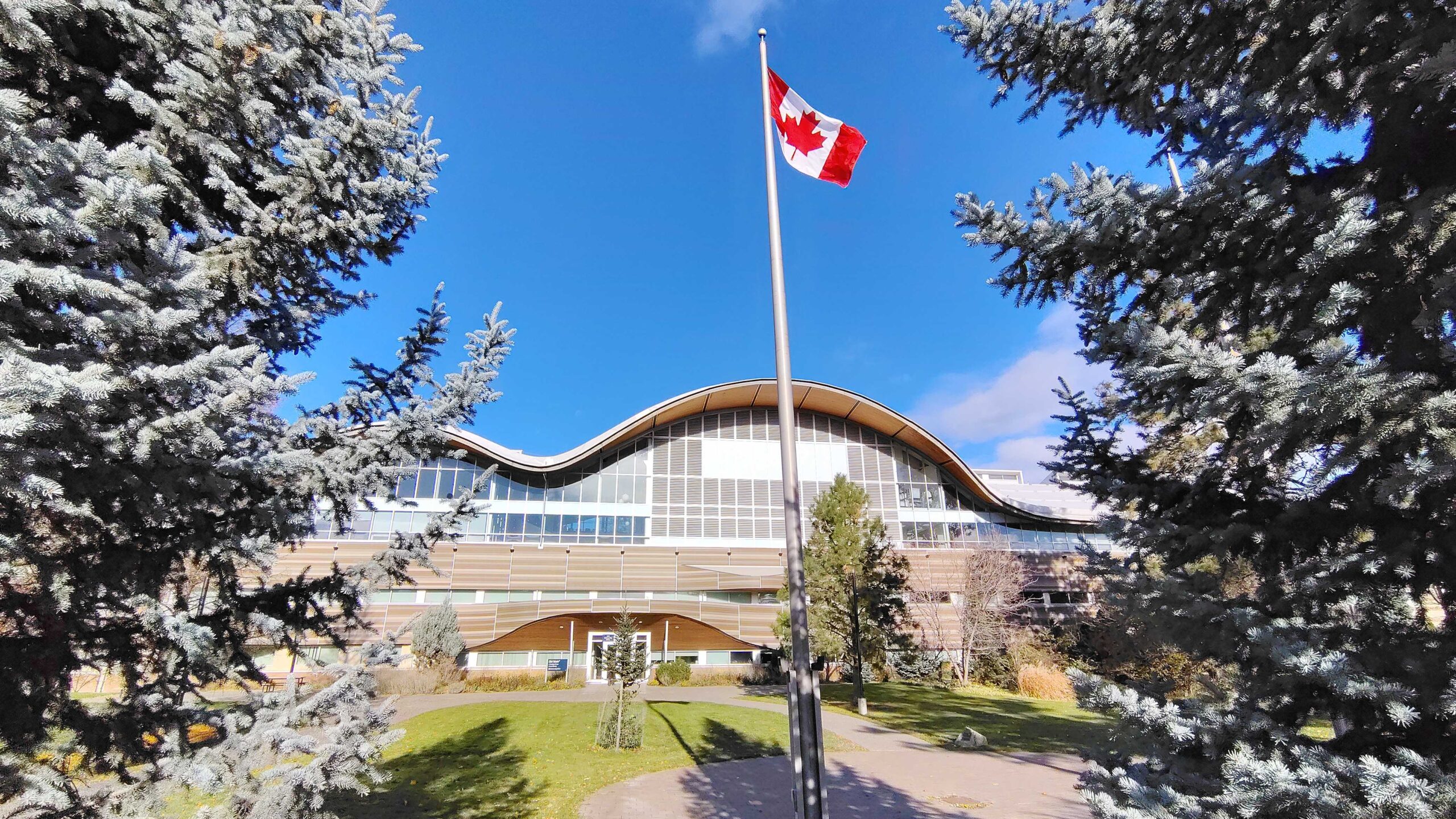
For nineteen of those years I taught at Thompson Rivers University as a contract faculty member: organizational behaviour, business ethics, leadership, and diversity, primarily to international student populations. My contracts were renewed semester by semester at the institution’s discretion. I understood precarity the way you understand weather when you live outside, as the condition that shapes what you are able to plan.
In May 2025, I was laid off. The same month, I received the Faculty Council Teaching Award. The institution that deemed me expendable simultaneously declared me exemplary. Two documents. Two logics. Two entirely separate bureaucratic pathways that never spoke to each other. I became the ghost data I had theorised: erased from the institutional record while the work I produced continues to circulate.
I also served as Chair of the Non-Regular Faculty Committee with the Federation of Post-Secondary Educators of British Columbia, advocating for contract faculty across the province. That role gave me a structural view of how budget decisions made in closed meetings cascade into precarious lives.
Relational Positioning
This research asks international students to trust me with their experiences of precarity, marginalisation, and institutional exclusion. My own positioning gives me knowledge that makes me a more perceptive listener, and it creates obligations I take seriously.
I can recognise what my participants describe when they talk about being essential to an institution that refuses to secure their place within it. I cannot claim equivalence. I hold protections they lack: citizenship, union membership, epistemic authority in the institution, whiteness. These differences are analytically relevant and ethically important. They are why I developed the concept of asymmetrical precarity, and why I hold my own story carefully alongside my participants’ stories rather than in front of them.
Territorial Positioning
This research was conducted on the unceded territory of the Tk’emlúps te Secwépemc within Secwépemcúl’ecw. I live and work on Syilx (Okanagan) territory. I hold these acknowledgements as ongoing questions rather than settled statements. This dissertation critiques the performativity of institutional land acknowledgements while insisting that the obligations they name are real. I carry that tension throughout this work.
Why This Matters
My class background, my contract status, my whiteness, my layoff, my citizenship: these are the lenses through which I interpreted what my participants showed me. They are strengths and limitations together. Naming them gives you the tools to evaluate my interpretations honestly.
The ground is complicated. It always has been. I have learned that belonging is complex, that identity carries obligations, and that the stories we tell about who we are shape what we notice, what we overlook, and how we act as researchers, educators, and community members.