What This Research Asks, Where It Takes Place, and How It Was Designed
“Education either functions as an instrument which is used to facilitate integration of the younger generation into the logic of the present system and bring about conformity, or it becomes the practice of freedom.”
Paulo Freire, Pedagogy of the Oppressed, 1970/2018, p. 34
This study explores how international business students experience and theorise the gap between institutional inclusion rhetoric and lived belonging. It investigates what I call the architecture of exclusion: the integrated system of economic, spatial, epistemic, and performative mechanisms through which the neoliberal university simultaneously recruits international students as essential revenue sources and positions them at the margins of belonging. I use the word “architecture” deliberately: exclusion here is far from accidental or incidental. It is built in, load-bearing, and structurally reinforced across multiple institutional systems at once.
The research uses a participatory visual methodology called blended witnessing, developed specifically for this study, to centre international students as experts on their own experience. Blended witnessing braids Photovoice (a method in which participants use cameras to document their own realities; Wang & Burris, 1997) with Scholarly Personal Narrative, in which the researcher weaves their own story alongside participants’ stories (Nash, 2004). The full dissertation, Through Our Eyes: A Photovoice Study of Belonging, Precarity, and Possibility with International Students in Higher Education, was submitted to the School of Leadership Studies at Royal Roads University in 2026. Findings and participant-generated analysis will be shared on this site following the doctoral defence.
The Research Site
The study was conducted at Thompson Rivers University (TRU) in Kamloops, British Columbia, Canada, located on the unceded territory of the Tk’emlúps te Secwépemc within Secwépemcúl’ecw, the traditional and ancestral lands of the Secwépemc Nation. The university’s location on Indigenous land is analytically central rather than incidental: it frames the contradiction of offering “belonging” to international students on territory that the institution itself occupies without consent.
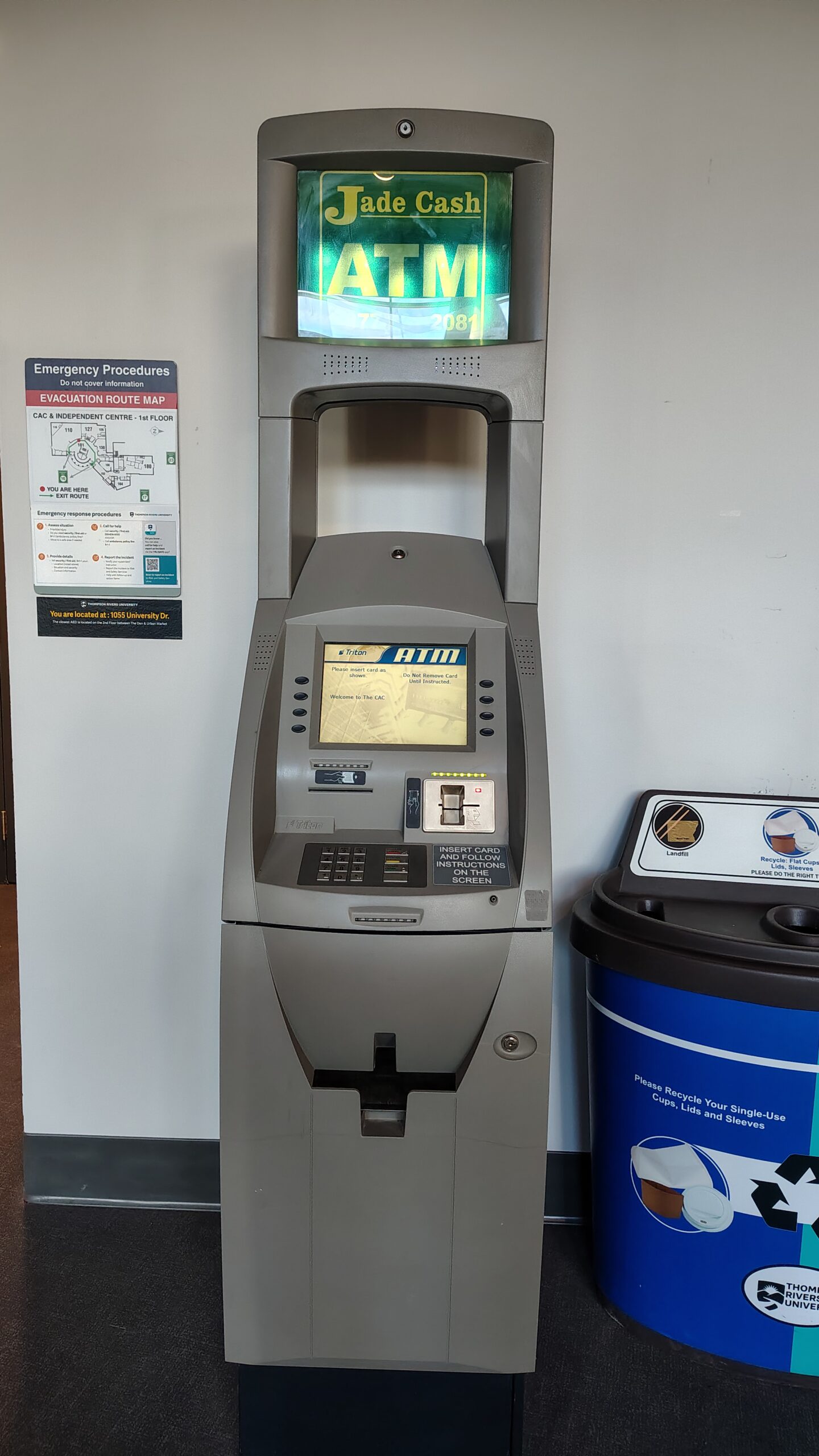
TRU enrolled approximately 7,400 international students in 2023, representing roughly 45% of the total student population and contributing an estimated $180 million in tuition revenue (Thompson Rivers University, 2023). International students pay approximately $28,000 annually in tuition, while domestic students pay approximately $6,000. This fourfold differential positions the university as what Stein and Andreotti (2016) describe as an institution structurally dependent on international student revenue while remaining culturally organised around domestic student norms.
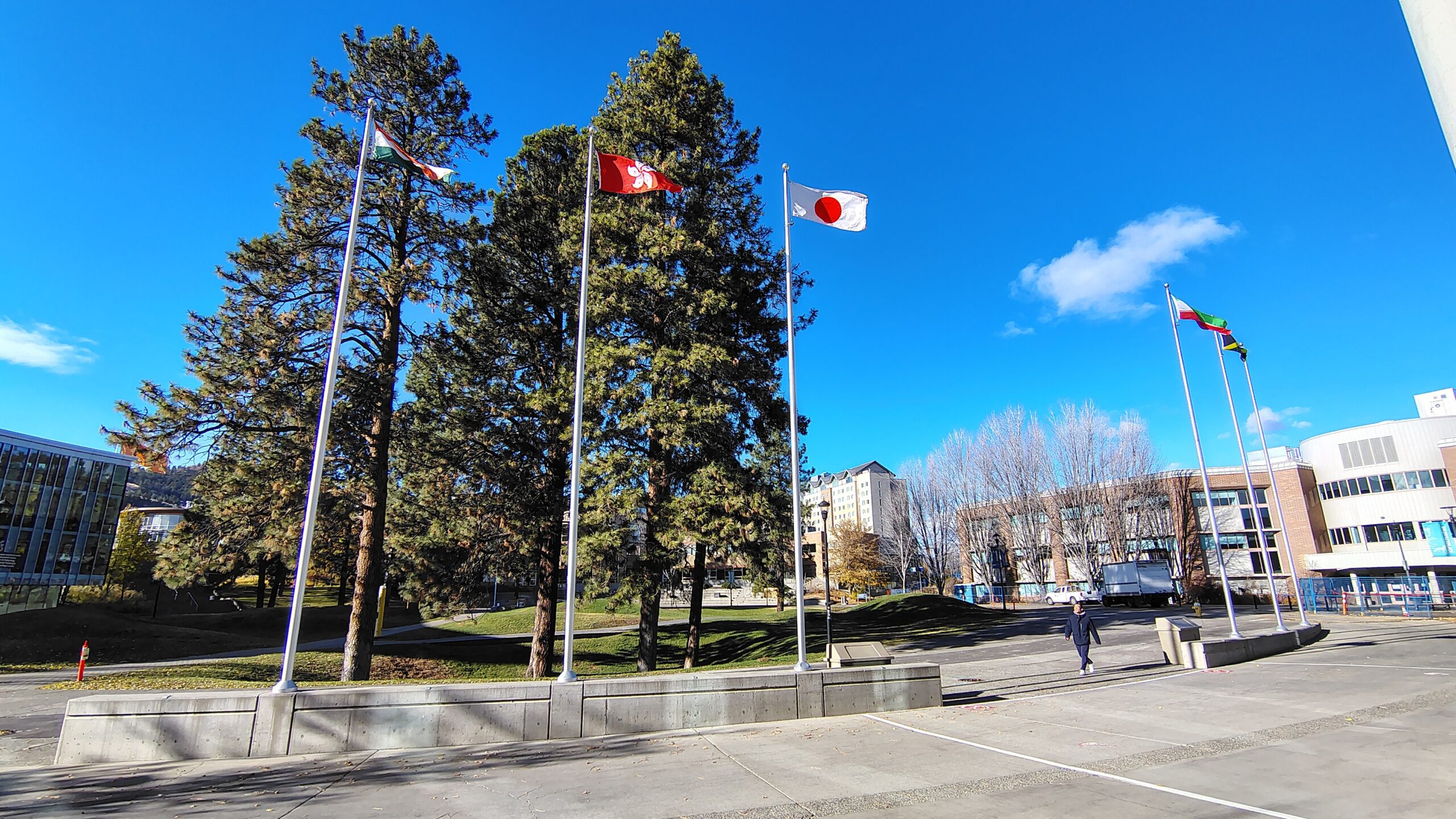


I spent twenty-five years at TRU, seventeen of them teaching organisational behaviour, business ethics, leadership, and diversity to predominantly international student populations. This prolonged insider positioning informs the study’s design: I know the institution’s corridors, its rhythms, and the structural conditions that shape how international students move through its spaces. I also know the experience of institutional precarity from the inside, having worked on semester-by-semester contracts for the entirety of my teaching career. That experience is background and data together.
A Critical Policy Moment
The study captures a moment of acute policy upheaval. In January 2024, the Canadian federal government announced a 35% reduction in study permit approvals, framing this cap as necessary to address housing pressures and programme integrity concerns (Government of Canada, 2024). This policy shift transformed international students from celebrated “global citizens” into political scapegoats for housing and healthcare crises they played no role in creating.
At the institutional level, this policy reversal created immediate anxieties around enrolment projections and revenue models. At the student level, it produced a pervasive sense of conditional belonging: the right to remain was suddenly debatable, and policy-induced anxiety became a defining feature of the educational experience. The participants in this study documented their lives during this specific window of temporal precarity. Their photographs carry that historical context.
The Central Question
The study addresses one central research question and four sub-questions. These questions were designed to position students as knowledge holders rather than research subjects, treating what they show me as theory-generating data rather than illustrative anecdote.
Central Research Question: How do international business students at Thompson Rivers University experience and theorise the gap between institutional inclusion rhetoric and lived belonging?
Table 1
Research Sub-Questions
| # | Sub-Question |
|---|---|
| 1 | How do international business students experience belonging and exclusion within the institution? |
| 2 | What barriers do international students navigate daily that remain invisible to faculty and administrators? |
| 3 | What bridges toward genuine belonging do students identify or create? |
| 4 | What theoretical frameworks or counter-narratives do international business students generate regarding their institutional positioning? |
Note. These questions position students as knowledge holders and treat their visual narratives as theory-generating data rather than illustrative examples.
Methodological Design
The study employs blended witnessing, a methodology I developed that braids Photovoice (Wang & Burris, 1997) with Scholarly Personal Narrative (Nash, 2004) and Interpretative Phenomenological Analysis (IPA; Smith et al., 2009) within a critical-transformative paradigm (Mertens, 2009). IPA is a qualitative approach that analyses how individuals make meaning of their lived experiences, attending to each person’s account in its particularity before identifying patterns across cases. International business students were invited to photograph their daily lives on campus using their own smartphones, producing visual evidence of the gap between what the institution promises and what it delivers. Simultaneously, I wove my own narrative of institutional precarity alongside theirs, maintaining analytical separation through what I call protective divergence: a deliberate strategy of keeping my story and participants’ stories parallel without allowing mine to colonise theirs. The full methodological rationale is described on the Methodology page.
What This Study Contributes
The dissertation is designed to make four original contributions to the social sciences. These contributions emerge from the integration of the theoretical framework (described on the Literature Review page) with the participatory visual methodology. I describe them as anticipatory here because the empirical grounding of each will be shared following the doctoral defence.
Table 2
Four Anticipated Scholarly Contributions
| Contribution | Type | What It Addresses |
|---|---|---|
| Time tax | Empirical | Documents the compounded temporal extraction international students experience through immigration, economic, linguistic, and affective labour, which depletes academic capacity while remaining invisible to institutional metrics. |
| Malperformative aesthetics | Theoretical | Extends Ahmed’s (2012) concept of non-performativity into spatial and visual registers, examining how university architecture and signage perform inclusion symbolically while withholding conditions for genuine belonging. |
| Blended witnessing and ghost data | Methodological | Develops a participatory methodology that braids participant photography with researcher reflexivity. Proposes treating participant withdrawal as structural evidence rather than attrition. |
| Mindset of enough | Conceptual | Proposes a counter-logic that reframes student survival strategies as sophisticated resistance to what I term institutional artificial scarcity. |
Note. These contributions are framed as anticipatory. The empirical grounding of each contribution through participant visual evidence will be shared on this site following the doctoral defence.
Dissertation Structure
The full dissertation unfolds across six chapters, a Coda, an Afterword, and seventeen appendices. Chapter One establishes context, positionality, and research questions. Chapter Two constructs the five-domain theoretical framework. Chapter Three details the blended witnessing methodology. Chapter Four presents visual findings. Chapter Five develops evidence-based recommendations. Chapter Six offers a critical accounting of the study’s limits and contributions. The Coda returns to the research site one final time. The Afterword tells the story of the researcher who became the data.